
The First Thing Most People Do (and Why It Backfires)
When a garage door starts making an odd noise, almost everyone reaches for the same fix: a can of WD-40 sprayed on whatever looks like it's moving. It's cheap, it's fast, and for a day or two the noise actually goes quiet, which feels like proof it worked. The problem is that WD-40 is a solvent and water-displacer, not a lubricant. It strips away the grease that's supposed to be on springs and rollers, and in Dade City's humidity it attracts dust and grit that turns into a gritty paste inside the hardware. The noise usually comes back louder within a few weeks, and sometimes a part that just needed lubrication ends up wearing out early because it ran dry. The fix isn't to avoid lubricant altogether — it's to use the right kind, in the right place, after you know what's actually making the sound.
Grinding: Metal Scraping on Metal
Grinding usually sounds like it's coming from inside the track or from the motor unit itself, and it gets worse as the door moves rather than staying constant.
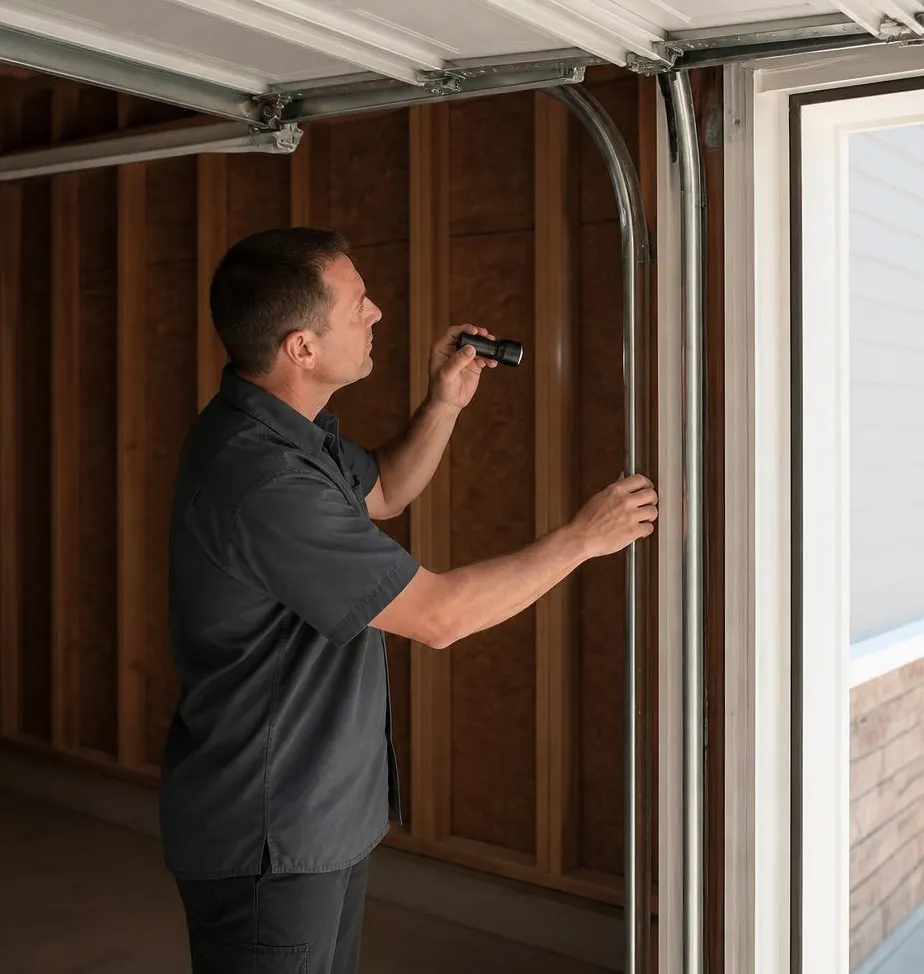
- Rollers first. A technician checks the rollers before anything else, since worn or cracked plastic rollers are the most common cause. Years of heat and humidity make plastic rollers brittle, and a flat spot or crack will grind against the track with every pass.
- Track alignment next. If the rollers look fine, the track gets checked for bends or gaps, often from a car bumping the door or a storm shifting the frame.
- Opener gear last. If the noise is coming from the motor housing specifically, the drive gear inside the opener may be worn down — a common failure point on openers that are five-plus years old.
The fix ranges from simply swapping nylon rollers (an easy, low-cost repair) to realigning or replacing a bent track section, up to replacing the opener's internal gear kit or the unit itself if the gear has stripped.
Squealing: High-Pitched and Constant
Squealing tends to happen right when the door starts moving and can sound almost like a bird chirp or a belt slipping.
- Springs checked first because dry, unlubricated torsion or extension springs are the single most common cause of squealing, especially once the factory lubrication wears off after a couple of years.
- Rollers checked second for the same wear pattern as the grinding noise, just at an earlier, less severe stage.
- Bearing plates checked third — these are the metal plates the spring shaft spins through, and in salt-air or coastal-adjacent conditions they can corrode and squeal even when everything else is fine.
A proper fix means applying a silicone- or lithium-based garage door lubricant to the springs (never oil-based products, which attract grit), replacing rollers that have gone past lubrication, or swapping out corroded bearing plates.
Popping or Banging: Loud, Sudden, One-Time
This is the noise that makes people jump, and it's usually not something to lubricate your way out of.
- Springs first. A loud bang, especially paired with the door suddenly feeling heavy or refusing to open, almost always means a torsion spring has snapped. Look for a visible gap in the coil above the door.
- Cables second. A fraying or loose cable can pop and slip off its drum, which sounds like a sharp crack rather than a bang.
- Hinges and panels last. Humidity swelling can warp wood or composite panels enough that they pop against each other or against loose hinge hardware as the door flexes.
Spring replacement involves releasing stored tension safely and installing a matched pair rated for the door's weight — this is not a DIY job, since torsion springs can cause serious injury under load. Cable repair means replacing the frayed cable and re-securing it to the drum. Panel and hinge issues are usually solved by tightening or replacing hardware and, if swelling is severe, replacing the affected panel.
Rattling: Loose, Shaky, Ongoing
Rattling is the noise most tied to Florida's weather specifically — afternoon storms and wind during hurricane season shake hardware loose faster here than in drier climates.
- Hardware first — loose bolts on tracks, brackets, and hinges from repeated vibration.
- Chain or belt tension second on the opener, which stretches slightly over time and needs periodic adjustment.
- Hinges third, especially ones showing rust from salt air or swelling from trapped moisture.
The fix is usually a full hardware tightening pass, adjusting opener chain/belt tension per the manufacturer spec, and replacing any hinges that are rusted or bent — important not just for noise but for keeping the door wind-load rated going into storm season.
When to Call Dade City Garage Door Repair
If you've identified a broken spring, a frayed cable, or a door that's come off its track, stop operating it and call us. Our Garage Door Spring Repair and Garage Door Cable Repair services handle the parts under real tension safely, and our Off Track Door Repair gets a derailed door back on its rails without further damaging the track or panels. We serve Dade City, Zephyrhills, San Antonio, Wesley Chapel, Land O' Lakes, Trilby, Lacoochee, and Saint Leo.
If your garage door in Dade City, FL is grinding, squealing, popping, or rattling, give Dade City Garage Door Repair a call — we'll find the real cause and fix it right the first time.